Sunday, 24 April 2016

Where on Google Earth #559

Elisabeth gave us a real challenge with contest 558, based on the number of days it remained unsolved by players in the game - as well as how much of the world I had to search trying to find the correct combination of water and rock colours. I was not able to figure out the geological feature and had to resort to scanning GE for hours.

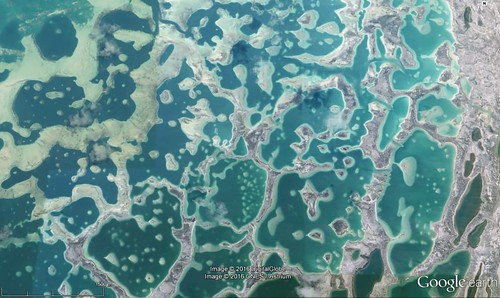
In the end, it was the northern part of Antelope Island, located in the south east corner of Great Salt Lake, Utah. The website for the state park located on the island mentions this for the geology:

Geology is the foundation for Antelope Island, and reveals a long history of complex geologic processes. Rocks on the island range from the oldest to the youngest in the state of Utah. Five periods of geologic time are preserved in detail. Unconformities are due to the area being elevated above sea level wherein rocks were either never deposited or were eroded away. Little is known of the geologic events represented by the older unconformities. The geology controls the collection and distribution of ground water and the location and size of springs.

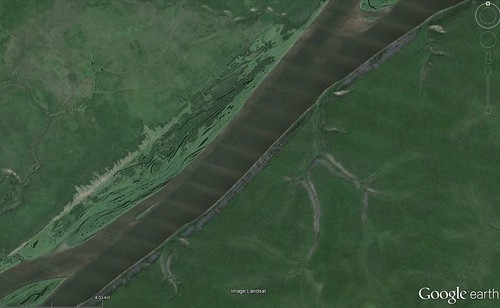
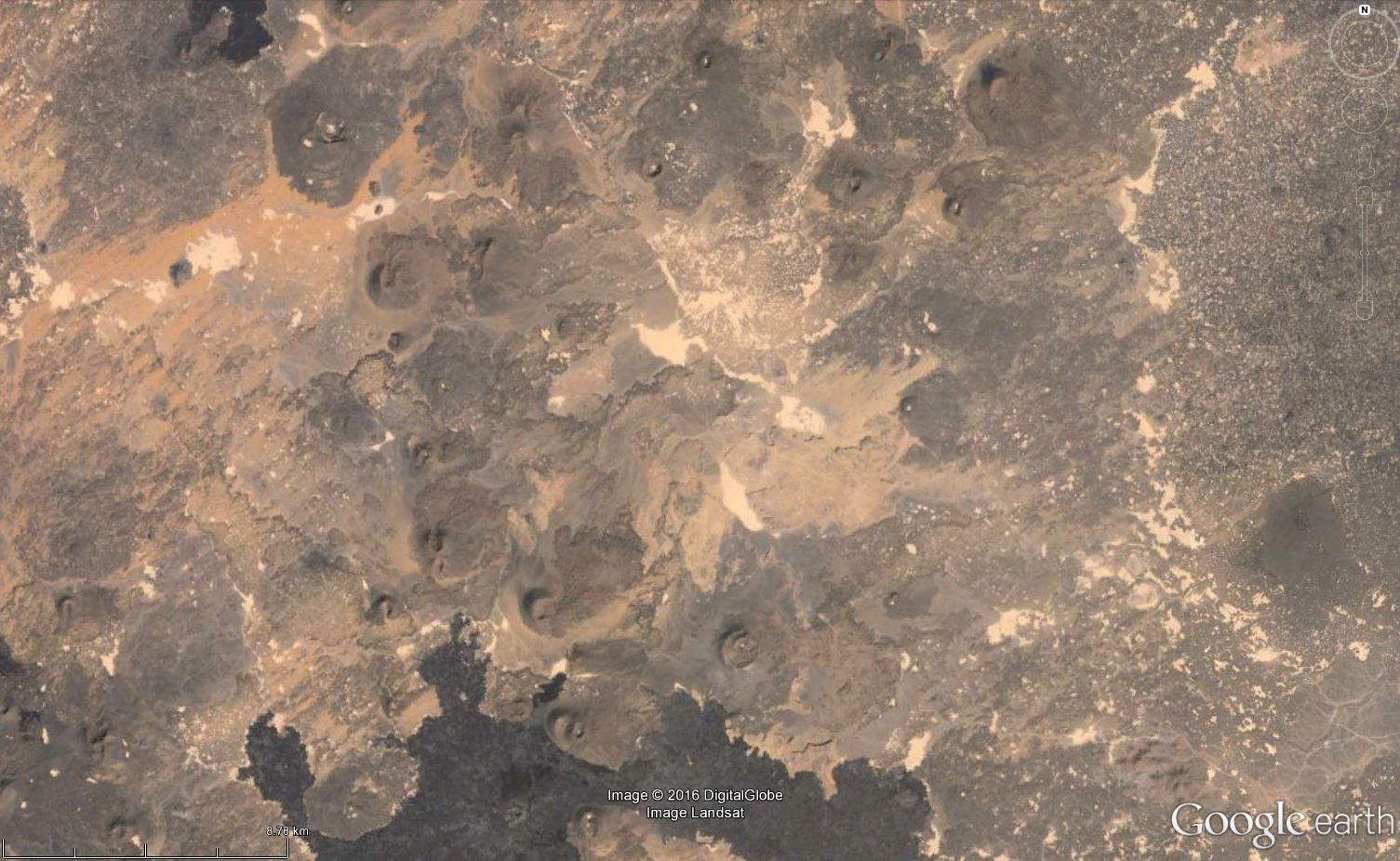
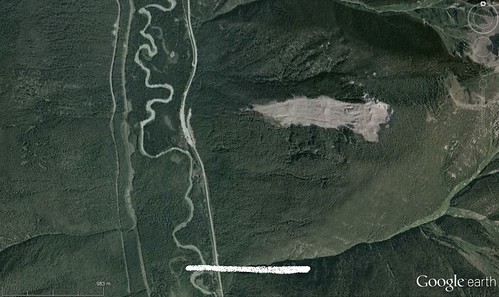
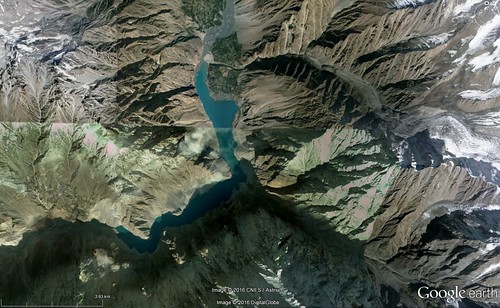
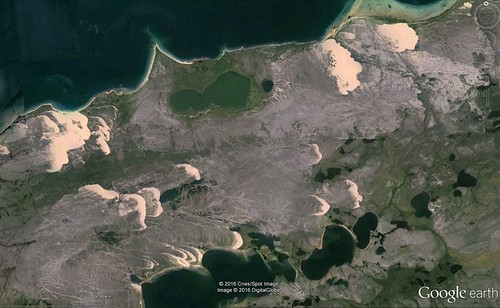
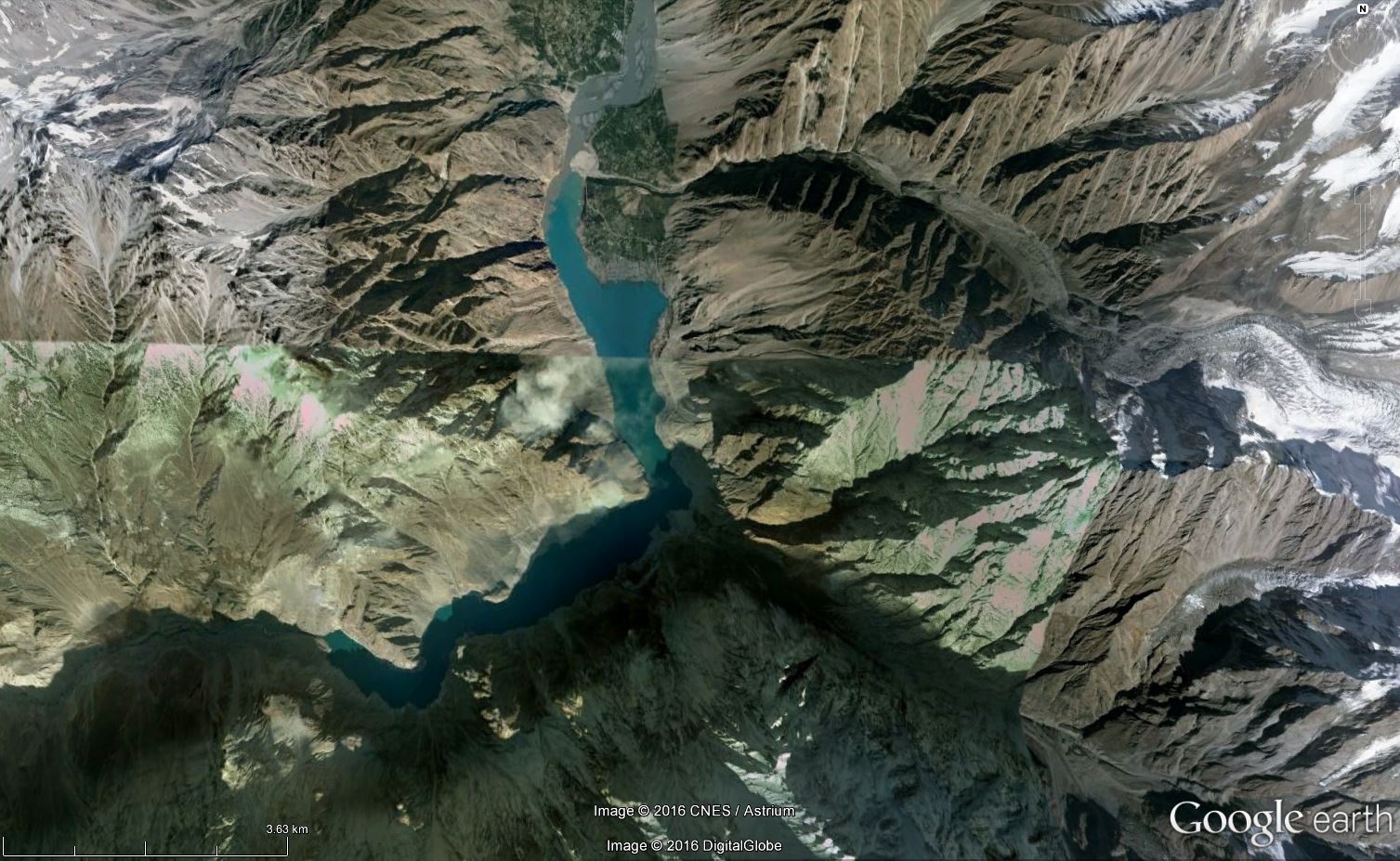
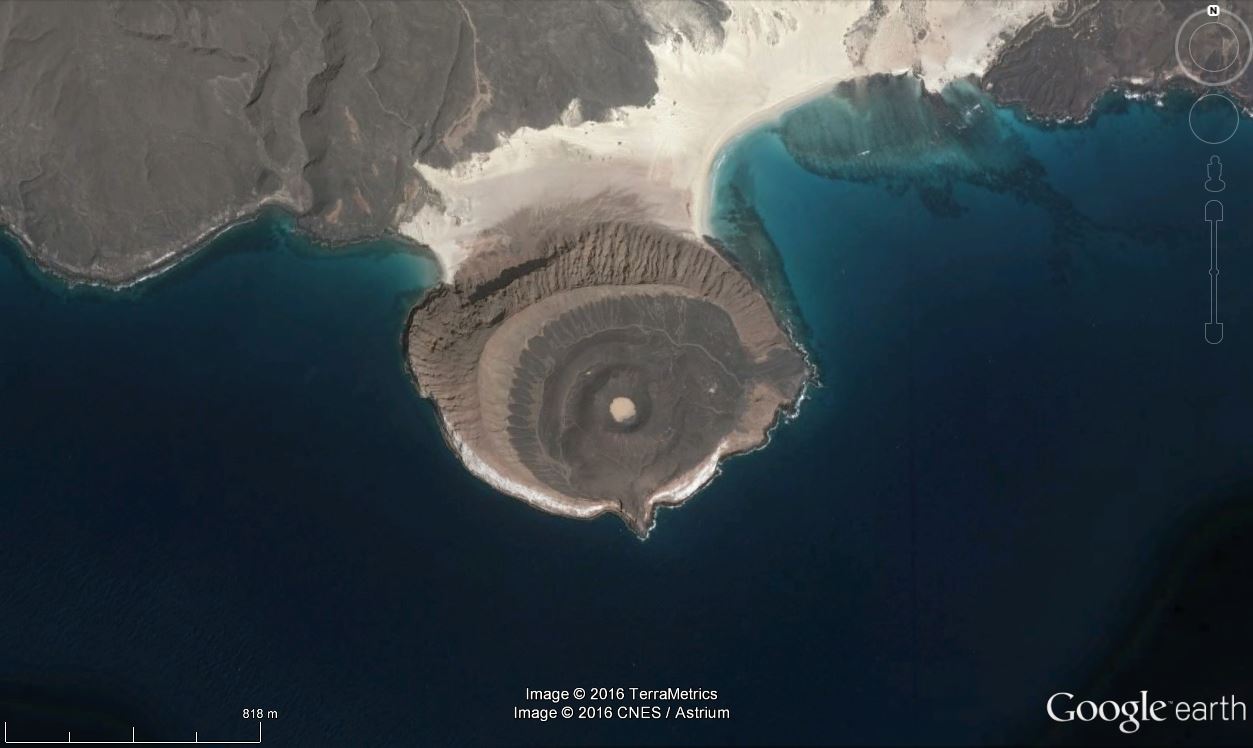
Contest #559:


Rules, tips and previous WoGEs are collected by Felix on his http://woge-felix.blogspot.ca/ blog with a KML file available with all WoGEs.

The Schott rule applies for this contest (1 hour for every previous win)

Posted at 0015 UTC April 24, 2016.

Friday, 15 April 2016

Where on Google Earth #556

The last contest from Ole (http://overburdenblog.blogspot.ca/2016/04/where-on-google-earth-555.html) was very hard for me as a non-geologist. I was able to pick out the "small" sinkholes, but Google searching took me to Guatemala, Japan and many other parts of the world that did not help. The flatness of the image did not help! Ole's hint helped a bit as it directed me towards something that had a special entrance, which turned out to be an underground river.

Luck intervened and I happened upon the Yucatan as a area of the world where there were underground rivers, and the sinkholes were "doors" into them.

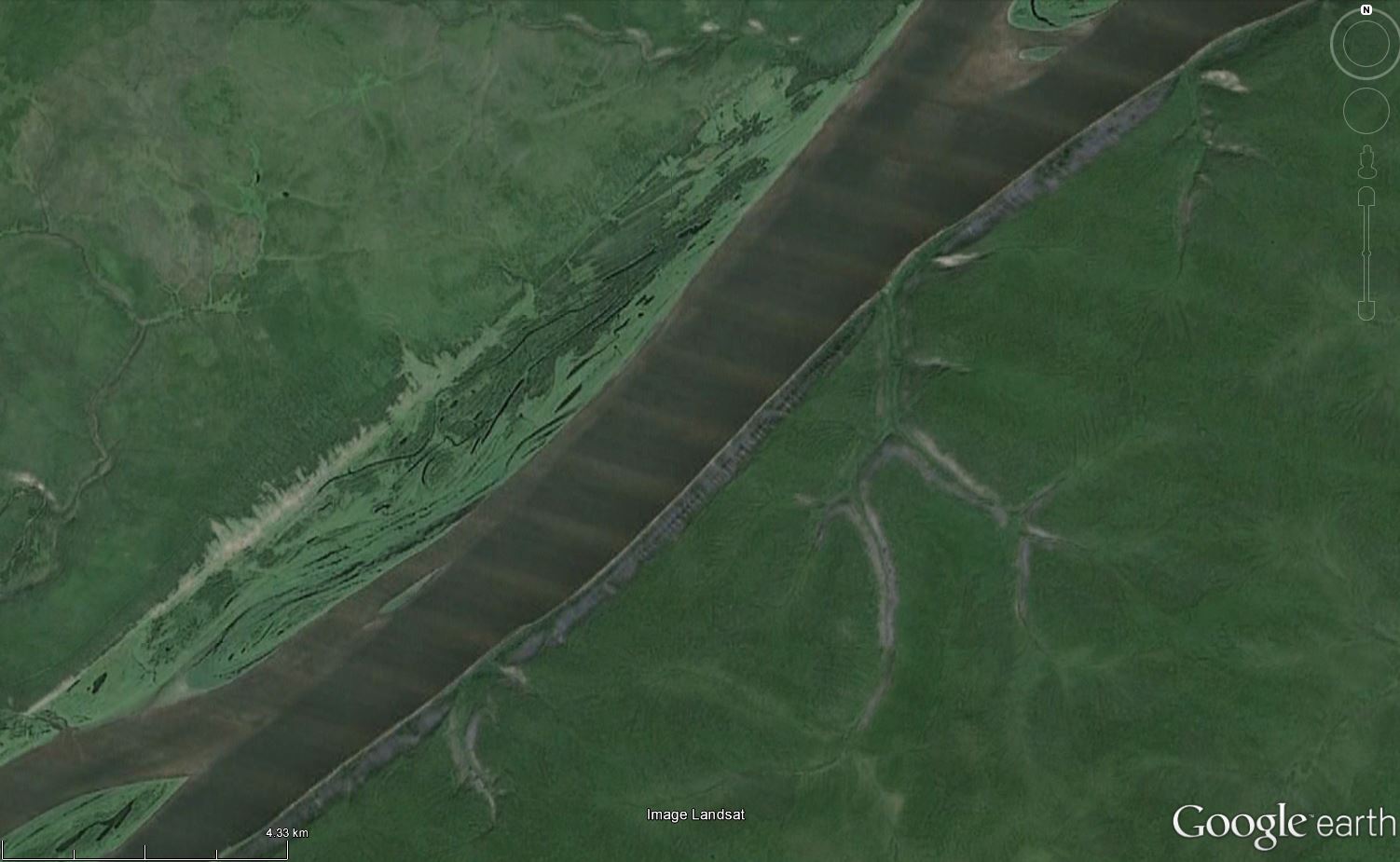
Here is contest #556:


Click here for a bigger image.

Thursday, 7 April 2016

Where On Google Earth #554

Paul presented us with a challenge that after the past few locations said Arizona, Utah or Nevada in the southwest USA. A quick search of northern Arizona lead me to Vermillion Cliffs National Monument, and to be more specific, the White Pocket area.

I supplied a link to an explanation of the geology in the area in contest #553. The information is repeated below.

http://www.amusingplanet.com/2013/03/white-pocket-vermilion-cliffs-national.html tells us that the entire area is covered in a gray rocky layer, sometimes only a few centimeters thick, above the red sandstone where the formations heave and drip that makes the entire landscape look like as if it was covered with icing sugar. In some spots the stone layers are completely twisted, just like an enormous marble cake.

The extraordinary geology at White Pocket is not easily explained. Some geologist proclaim that White Pocket is a result of “soft sediment deformation”, meaning the contortions and twisting and turning at White Pocket occurred back in Jurassic time while the sand was saturated and before the sand was completely turned into rock.

According to one retired petroleum geologist Marc Deshowitz, who studied White Pocket more than anyone else, believes the landscape was the result of a huge sand-slide mass, triggered by an earthquake, detaching from a tall dune and traveling rapidly downslope. As the mass slid and tumbled downslope, it ripped up chunks of laminated sand beneath that intermixed with the basal part of the slide. The sand mass eventually filled a large pond or oasis. This large sand mass is the featureless bleached-white sandstone or "cauliflower rock" seen today. The instantaneous loading from the sand mass caused pressure adjustments within the underlying saturated sand resulting in contortions and fluid escape structures such as sand volcanoes. Marc has identified at least 25 of these features supporting his theory.

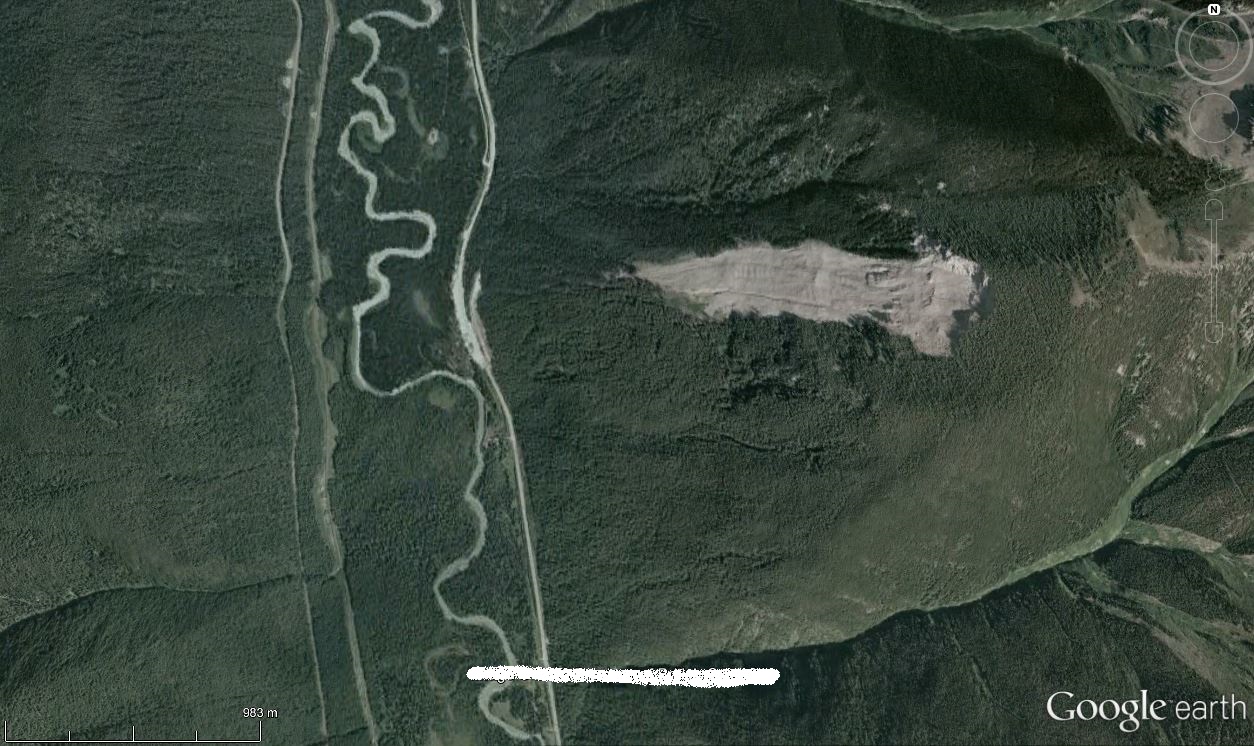
Contest #554:


Click here for a larger image.

Thursday, 31 March 2016

Where On Google Earth #550

Ole's latest image (#549: http://overburdenblog.blogspot.ca/2016/03/where-on-google-earth-549.html) was a puzzle for a little while, especially with the rotation of the image. But once I figured out which way was up, the scoured valley to the south led me to search for glaciers that collapsed, releasing a large quantity of water. Google identified one such location as the Kokla Glacier in Ossetia, Russia - looking around there gave me the answer I was looking for.

The webpage at http://earthobservatory.nasa.gov/Features/Kolka/ has lots of information on what happened in this event back in September 2002.

Contest #550 - credits are obliterated as they lead right to the location:


Click here for a larger image.

Previous WoGEs are collected by Felix on his blog and a KML file.

No Schott rule this time.

Tuesday, 29 March 2016

WOGE #548 - second attempt

Second attempt - after I managed to pick a location already played back in December 2010 in contest 241: http://woge-felix.blogspot.ca/2010/12/where-on-google-earth-241.html!

After my long hunt for black lava and cinder cones that took much of the Easter weekend, 547 from Paul (http://wogepaulvoestermans.blogspot.ca/2016/03/where-on-google-earth-547-in-woge-546.html) was an easier one for me. The red colour was easier to see on Google Earth, and after search Utah and Arches National Park, I moved south to Australia. There I found Kata Tjuta or The Olgas, located just to the west of Uluru.

From Wikipedia (https://en.wikipedia.org/wiki/Kata_Tjuta): Kata Tjuta, sometimes written Tjuṯa (Kata Joota), and also known as Mount Olga (or colloquially as The Olgas), are a group of large domed rock formations or bornhardts located about 365 km (227 mi) southwest of Alice Springs, in the southern part of the Northern Territory, central Australia. Uluru, 25 km (16 mi) to the east, and Kata Tjuta / Mount Olga form the two major landmarks within the Uluru-Kata Tjuta National Park.

The 36 domes that make up Kata Tjuta / Mount Olga cover an area of 21.68 km2 (8.37 sq mi), are composed of conglomerate, a sedimentary rock consisting of cobbles and boulders of varying rock types including granite and basalt, cemented by a matrix of sandstone.

The highest point, Mount Olga, is 1,066 m (3,497 ft) above sea level, or approximately 546 m (1,791 ft) above the surrounding plain (198 m (650 ft) higher than Uluru).

Here is my second attempt to find a unique location for 548:

Go here for a bigger version: https://c2.staticflickr.com/2/1451/25849202990_7c61d84599_o.jpg

Rules, tips and previous WoGEs are collected by Felix on his http://woge-felix.blogspot.ca/ blog and a KML file is available with all WoGEs, currently as far as 542.

No Schott rule this time - to give the geologists another chance to wrest the game away from the non-geologists!

Monday, 28 March 2016

WOGE #548

After a long hunt for black lava and cinder cones that took much of the Easter weekend, 547 from Paul (http://wogepaulvoestermans.blogspot.ca/2016/03/where-on-google-earth-547-in-woge-546.html) was an easier one for me. The red colour was easier to see on Google Earth, and after search Utah and Arches National Park, I moved south to Australia. There I found Kata Tjuta or The Olgas, located just to the west of Uluru.

From Wikipedia (https://en.wikipedia.org/wiki/Kata_Tjuta): Kata Tjuta, sometimes written Tjuṯa (Kata Joota), and also known as Mount Olga (or colloquially as The Olgas), are a group of large domed rock formations or bornhardts located about 365 km (227 mi) southwest of Alice Springs, in the southern part of the Northern Territory, central Australia. Uluru, 25 km (16 mi) to the east, and Kata Tjuta / Mount Olga form the two major landmarks within the Uluru-Kata Tjuta National Park.

The 36 domes that make up Kata Tjuta / Mount Olga cover an area of 21.68 km2 (8.37 sq mi), are composed of conglomerate, a sedimentary rock consisting of cobbles and boulders of varying rock types including granite and basalt, cemented by a matrix of sandstone.

The highest point, Mount Olga, is 1,066 m (3,497 ft) above sea level, or approximately 546 m (1,791 ft) above the surrounding plain (198 m (650 ft) higher than Uluru).[1] Kata Tjuta is located at the eastern end of the Docker River Road.

Contest #548 is not red, but shades of blue, green and beige.


Go here for a bigger version: https://c2.staticflickr.com/2/1563/26037026881_f48206c0c0_o.jpg

Rules, tips and previous WoGEs are collected by Felix on his http://woge-felix.blogspot.ca/ blog and a KML file is available with all WoGEs.

No Schott rule this time - to give the geologists a chance to wrest the game away from the non-geologists!

Tuesday, 22 March 2016

Where on Google Earth #544

Felix provided us with an interesting location that initially had me hunting in the Northern Hemisphere for many days before reassessing the shadow pattern and moving south. It was luck that ended up with me scanning South Africa for a circular pattern with small towns along the northern edge.

I hope that 544 provides an interesting search.


Go to https://c2.staticflickr.com/2/1660/25866274252_fc5ea95fa9_b.jpg for a larger image

Rules, tips and previous WoGEs are collected by Felix on his http://woge-felix.blogspot.ca/ blog and a KML file is available with all WoGEs. Schott rule applies for this contest (1 hour for every previous win)

Posted at 1545 UTC March 22, 2016.