Wednesday, 24 February 2016

Where on Google Earth #536

Paul posted a picture of Sedona, Arizona in the USA for us in contest 535.

The red colours in the picture led me to the southwest US, and quickly I was able to identify the location of the image as the town and surrounding of the picturesque town of Sedona.

http://www.arizonaruins.com/sedona/sedona_geology.html has lots of information about the geology of this part of the world.

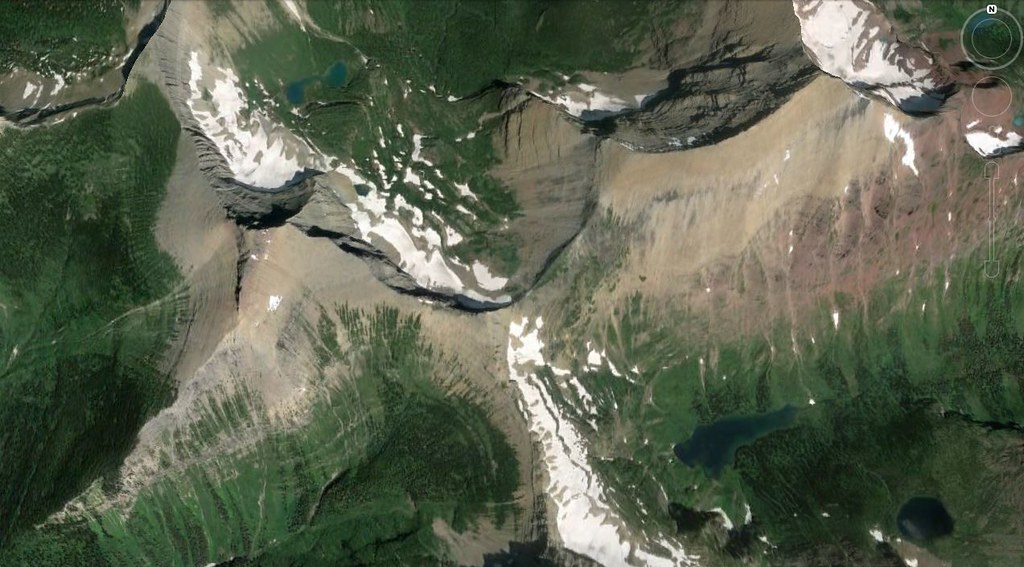
This contest has a interesting feature to help the searchers narrow down the location.


Rules, tips and previous WoGEs are collected by Felix on his blog and a KML file is available with all WoGEs.

The Schott rule is in place for this contest. Posted at 1920 UTC, February 24th, 2016

Monday, 22 February 2016

Where on Google Earth #534

Paul took us to Iceland and the mid-Atlantic Ridge in Þingvellir National Park for contest 533.

Þingvellir is notable for its unusual tectonic and volcanic environment in a rift valley.

The continental drift between the North American and Eurasian Plates can be clearly seen in the cracks or faults which traverse the region, the largest one, Almannagjá, being a veritable canyon. This also causes the often measurable earthquakes in the area.

Some of the rifts are full of clear water. One, Nikulásargjá, is better known as Peningagjá (lit. "coin fissure"), as its bottom is littered with coins. After being bridged in 1907 for the occasion of the visit of King Frederick VIII of Denmark, visitors began to throw coins in the fissure, a tradition based on European legends.

https://en.wikipedia.org/wiki/%C3%9Eingvellir

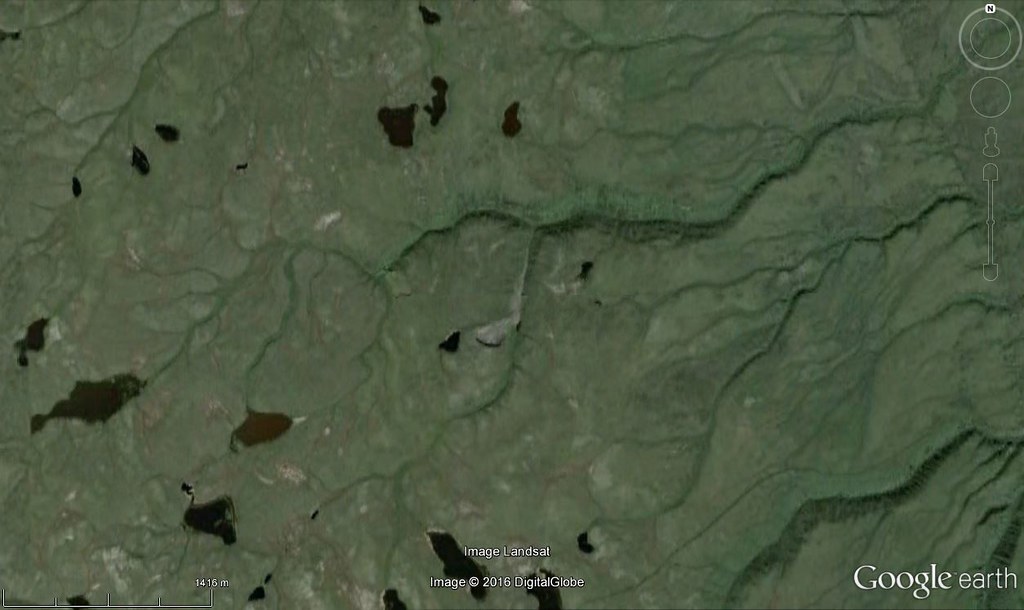
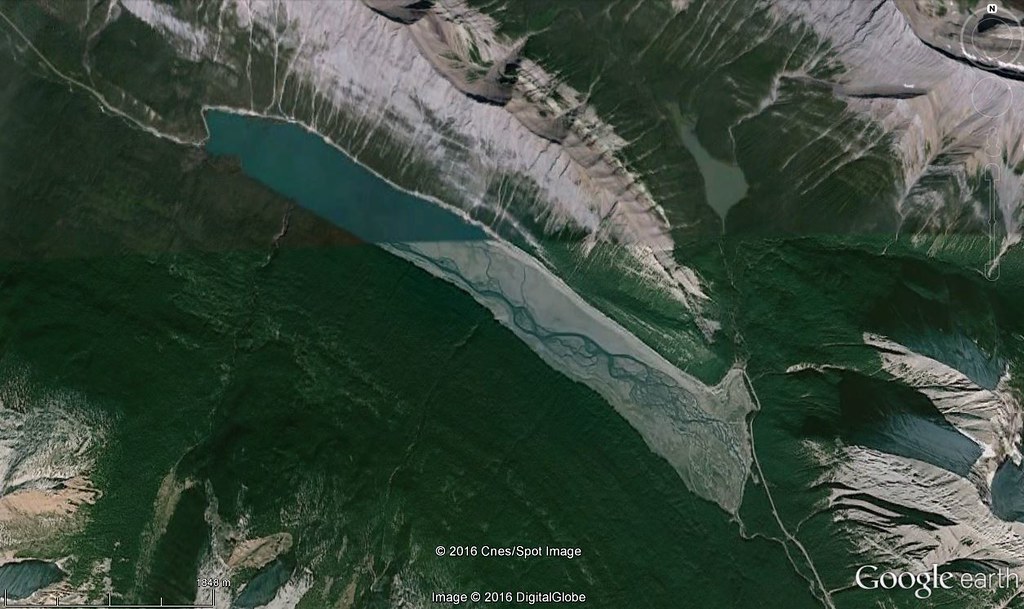
For contest 534, we stay in a green part of the world.


Go here for a larger image.

Rules, tips and previous WoGEs are collected by Felix on his blog and a KML file is available with all WoGEs.  Schott rule applies for this contest (1 hour for every previous win)

Posted at 0455 UTC February 24, 2016.

Sunday, 21 February 2016

Where on Google Earth #532

Paul Voestermans, a first time winner in WOGE, gave us an image showing Mount Eiger in Switzerland.  I was lucky to recognize the terrain as on the northern edge of the Alps and then it was a matter of hunting down the exact location.

Mount Eiger has been the site of many deaths of climbers trying to ascend the steep north face, and also the location of many rockfalls over the years.  The last major one was in July 2006, when a chunk of rock as big as a skyscraper fell.  (http://www.nature.com/news/2006/060717/full/news060717-3.html)

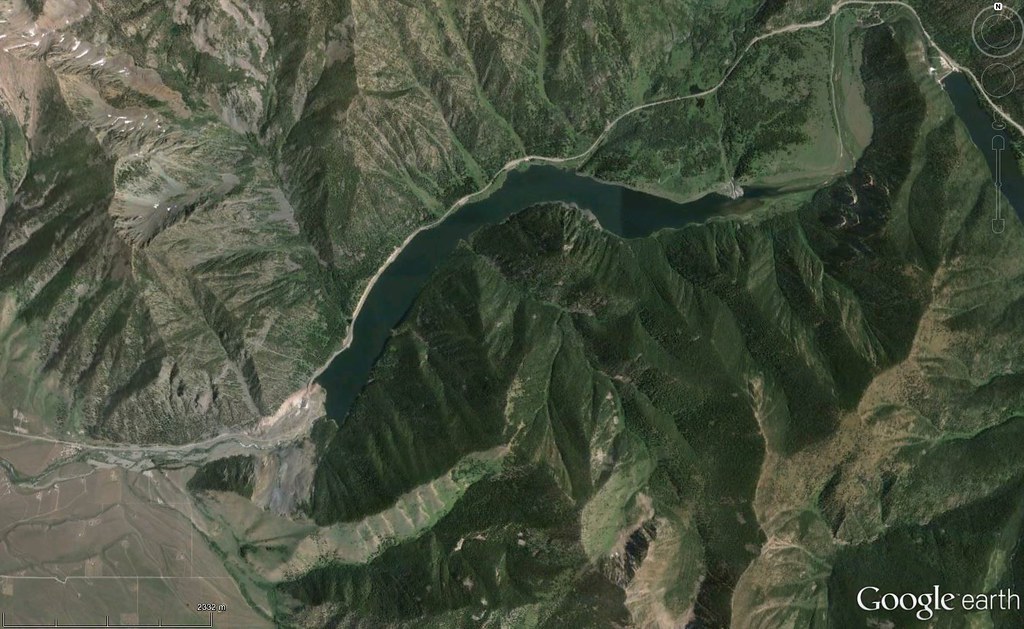
For the next contest, we go somewhere a bit drier.


Go to https://c2.staticflickr.com/2/1585/25155533286_64514bf60a_b.jpg for a larger image

Rules, tips and previous WoGEs are collected by Felix on his http://woge-felix.blogspot.ca/ blog and a KML file is available with all WoGEs.  Schott rule applies for this contest (1 hour for every previous win)

Posted at 0025 UTC February 22, 2016.


Wednesday, 17 February 2016

Where On Google Earth #529

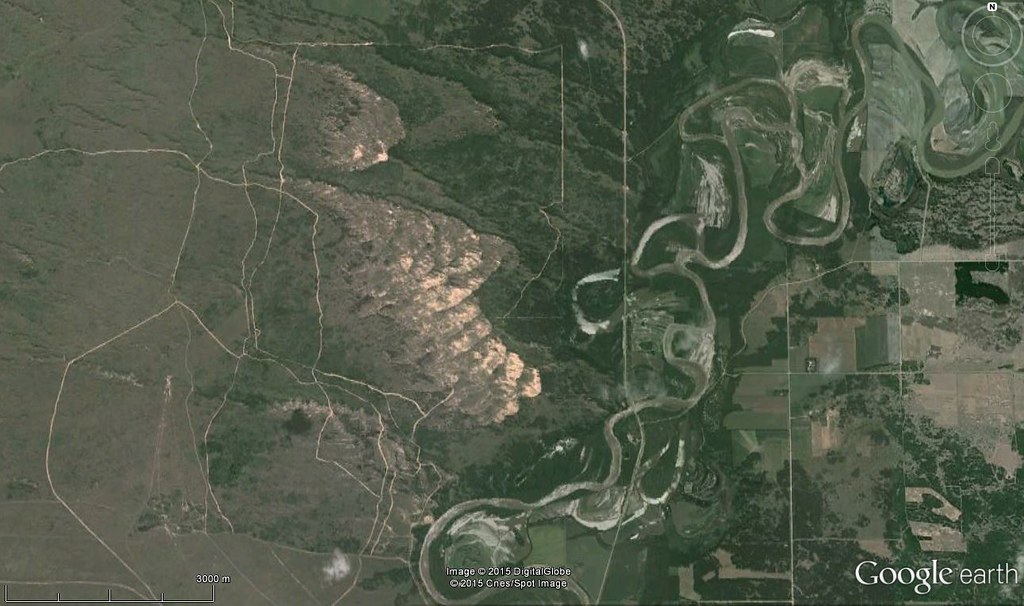
WOGE 528 was quite easy to solve - the problem for me as a non-geologist was to identify the geological feature at this location. 

Luckily Google was able to help me out with a link to a Scientific American blog (http://blogs.scientificamerican.com/history-of-geology/january-11-1771-the-birthday-of-lake-alleghe/) with details on the catastrophic landslide event that occurred in January 1771, and resulted in Lake Alleghe forming in this location.

https://c2.staticflickr.com/2/1483/25067438636_2ecdcb0e4e_b.jpg


Click here for a bigger image

Saturday, 12 December 2015

Where On Google Earth #522

It's hard squeezing in between Ole and Felix, but I was lucky this time - and managed to find Ole's #521 after a bit of searching to find the right shade of colour seen for the water and the barren terrain.  

The main item of geologic interest is the circular hole - the cryolite mine at Iviqtut. Cryolite is used in the process of modern aluminum extraction. This location is one of the only naturally occurring locations of this very important compound.

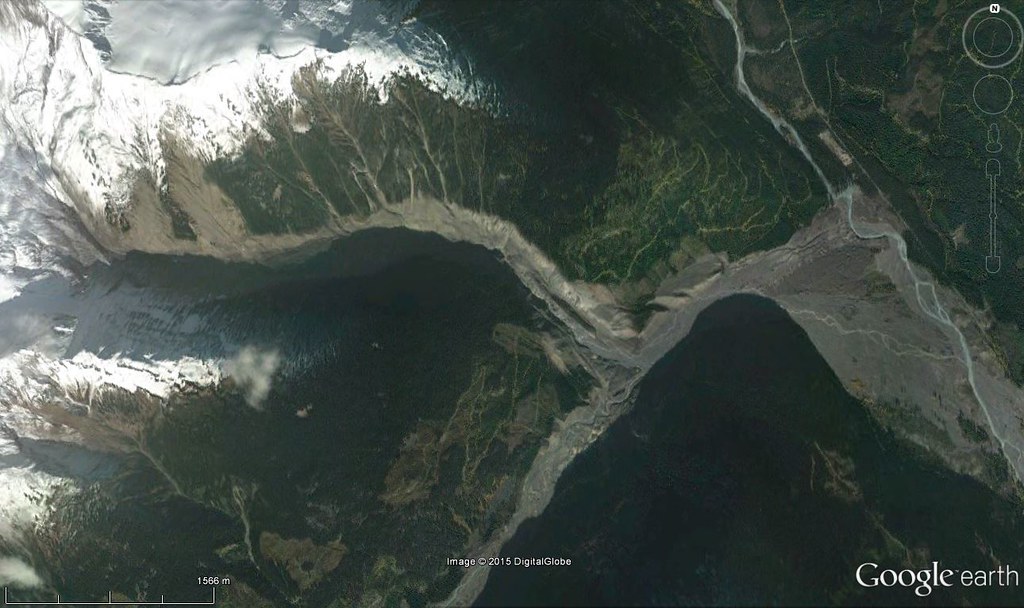
For this contest, let's go somewhere warmer!

https://c1.staticflickr.com/1/762/23702472786_cd856c8ee0_b.jpg

The Schott Rule is invoked to give others a chance to solve the puzzle!  This means previous winners have to wait one hour for each win they previously had, before they are allowed to solve. 

As always, the first person to post the position and whatever is interesting about the geology/hydrology/geowhatever in this location, wins the privilege of hosting the next WoGE.

Previous WoGEs are collected by Felix on his blog and a KML file.


Puiblished at 1520 UTC, December 12, 2015

Tuesday, 22 September 2015

Where on Google Earth #506

505 was one that took me three weeks to solve - but it was only after Luis-Filipe gave us the larger scale image that I made any significant progress identifying the topography and the land coverage.

WoGE #506 is given here.


Since I anticipate this will be an easy one, let's use the Schott Rule to slow the real speedsters down a bit.  It is now September 23nd at 0345 UTC / September 22nd at 11.45 pm EDT.

Schott rule: The host of a WOGE may or may not decide to invoke the so called "Schott rule". This means previous winners have to wait one hour for each win they previously had, before they are allowed to solve. If you invoke the Schott rule, you have to publish the posting time in UTC or GMT.

WoGE rules: http://woge-felix.blogspot.de/p/rules-of-geological-whereongoogleearth.html

Monday, 17 August 2015

Where on Google Earth #501

WOGE 500 (http://flowbanded.blogspot.ca/2015/07/where-on-google-earth-v05k-woge-500.html) was not easy to find.  But eventually I did, after many futile attempts to locate it.

Here is the next contest entry - some might say it has geographic significance, more than geological significance.

https://farm6.staticflickr.com/5751/20668146605_596fa11f60_b.jpg